warning: There is no guarantee of future profits, platform success, or token value appreciation.

Krona Token & Krona Wallet Escrow Model (Whitepaper)

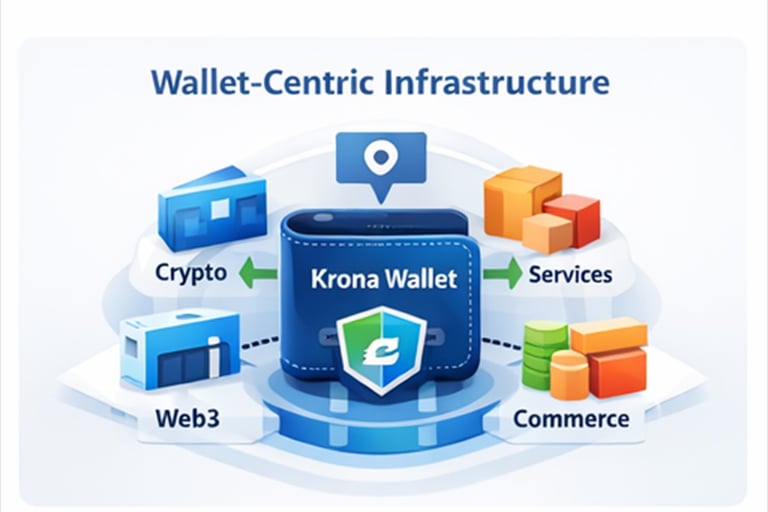
Krona Escrow Infrastructure
Secure Web3 Commerce Powered by Utility-Driven Tokens


Slide Version
Krona Wallet as Infrastructure
Wallet-centric escrow architecture
User-level transaction control and approvals
Intuitive UX designed for Web3 commerce
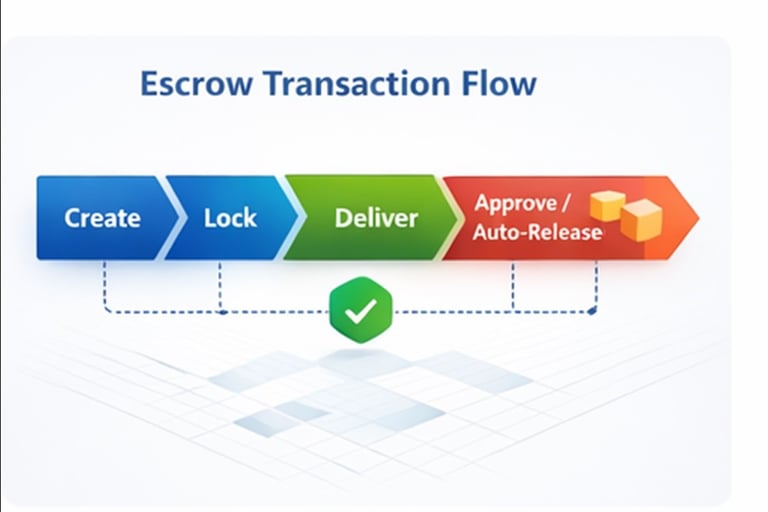
Escrow Transaction Flow
Create → Lock → Deliver → Approve / Auto-Release → Settle / Dispute
Fully transparent and automated end-to-end transaction process
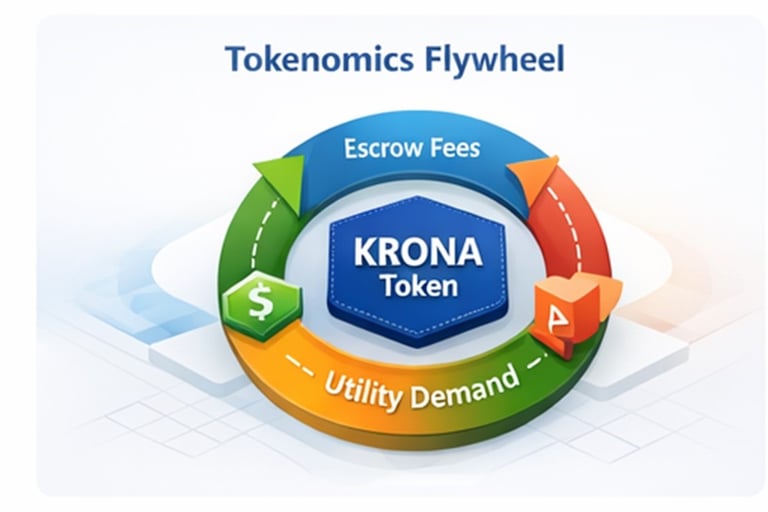
Tokenomics Flywheel
Escrow fees paid in KRONA
Increased usage drives real token demand
Staking enhances escrow benefits
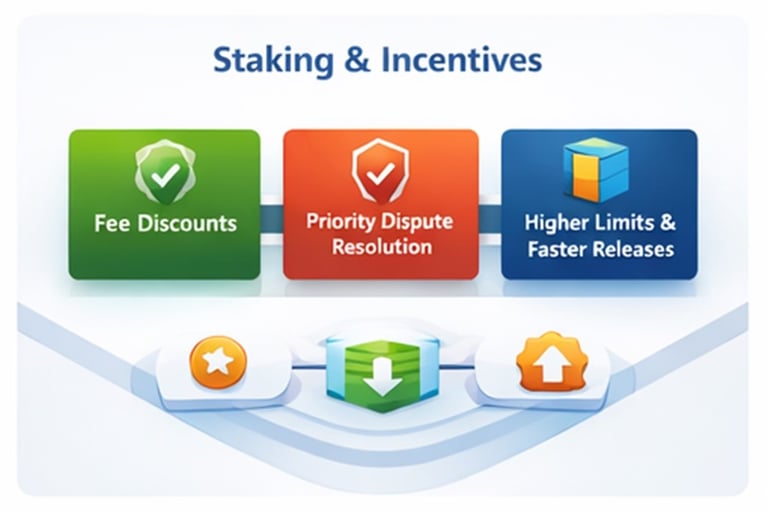
Staking & Incentives
Escrow fee discounts
Priority dispute resolution
Higher transaction limits and optimized auto-release conditions
Technical Architecture
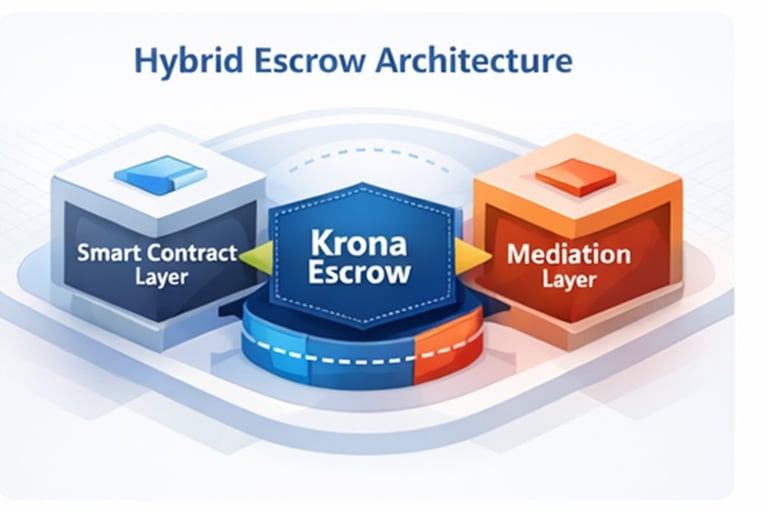
Hybrid escrow model
Smart contracts combined with operational mediation
On-chain transparency with scalable off-chain integration
Security & Trust
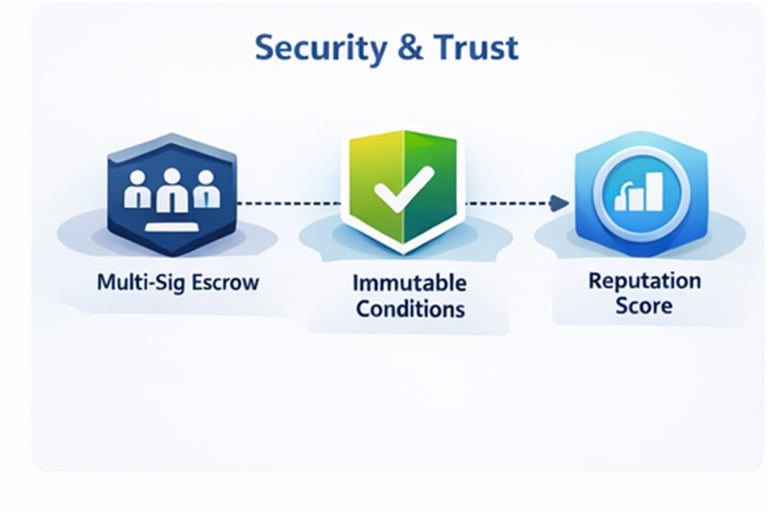
Multi-signature escrow mechanism
Immutable transaction conditions
Reputation scoring based on transaction history
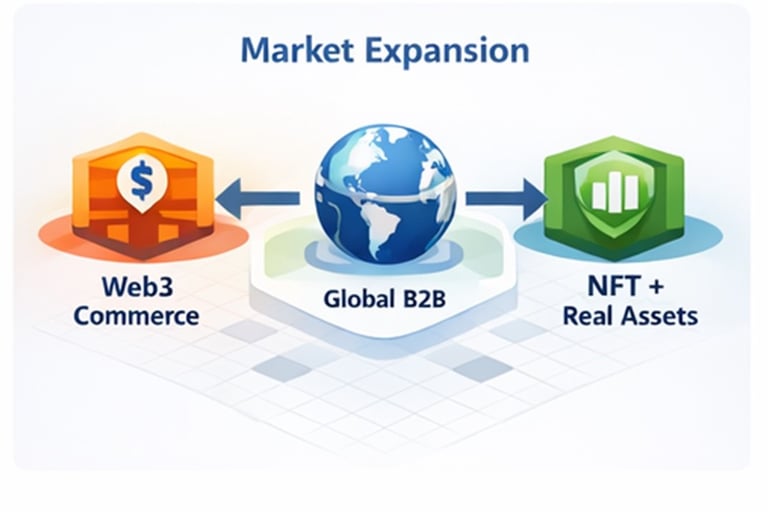
Market Expansion
Web3 commerce
Global B2B payments and settlements
NFT and real-world asset (RWA) integration
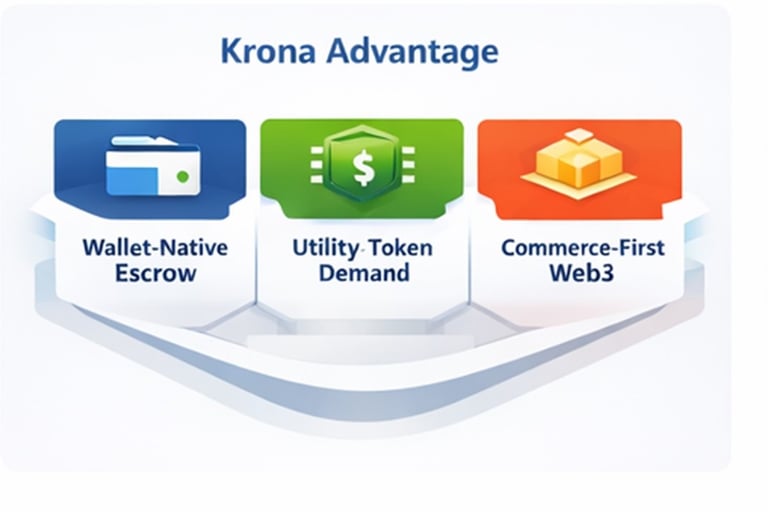
Krona Advantage
Wallet-native escrow infrastructure
Sustainable, usage-driven token demand
Commerce-first Web3 infrastructure design
1. Overview
The Krona Escrow Model is an escrow-based transaction infrastructure built on Krona Token (KRONA) and Krona Wallet, designed to securely connect crypto assets, physical goods, and digital services. The model enables safe and transparent transactions in trustless environments while positioning KRONA as a practical utility token rather than a passive holding asset.
Krona Wallet is designed not merely as a storage wallet, but as a Web3 wallet integrating escrow, payments, and dispute resolution, enabling real-world crypto commerce.
2. Design Goals
Enable secure transactions in trustless environments
Bridge crypto assets with real-world goods and services
Maximize real utility of Krona Token
Reduce operational costs through automated escrow processes
Establish a globally scalable escrow standard for Web3 commerce
3. System Architecture
3.1 Structural Overview
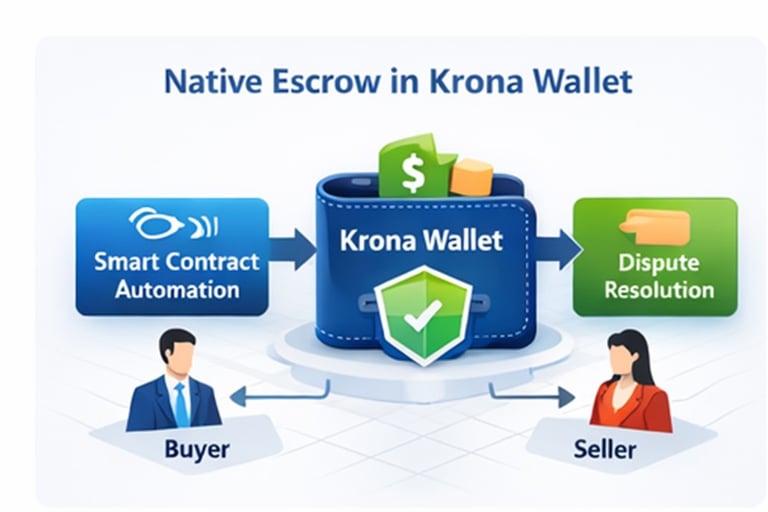
Buyer: Creates transactions and deposits assets via Krona Wallet
Krona Wallet Escrow: Manages locked assets and transaction conditions
Seller: Delivers goods or services and receives payment upon completion
The escrow operates as a native function within Krona Wallet, adopting a hybrid model that combines smart-contract automation with operational mediation for real-world usability.
4. Transaction Flow
The buyer creates a transaction and deposits KRONA or supported tokens into escrow via Krona Wallet.
The escrow system locks the assets and records transaction conditions (amount, duration, approval rules, dispute terms).
The seller delivers the agreed goods or services.
Upon buyer approval or fulfillment of auto-release conditions, escrowed assets are released to the seller.
4.1 Automatic Release Mechanism
Buyer does not respond within the predefined period
Delivery or service completion conditions are met
The system automatically finalizes the transaction and releases funds
5. Role of Krona Token (KRONA)
Krona Token functions as the core utility asset within the escrow ecosystem:
Medium of Payment: Primary settlement asset for escrow transactions
Fee Payment: Used for escrow and transaction fees
Trust Collateral: Enhances transaction credibility
Reward Asset: Incentives for escrow usage and ecosystem participation
Staking Asset: Enables fee discounts, priority dispute handling, and governance expansion
Through this structure, KRONA transitions from a holding-oriented token to a real-use transactional asset.
6. Supported Use Cases
Crypto ↔ Crypto secure trades
Crypto ↔ Physical goods transactions
Crypto ↔ Digital services and outsourcing
NFT purchases linked to physical assets or rights
Global B2B and cross-border commerce
7. Dispute Resolution System
7.1 Dispute Initiation
Either party may initiate a dispute within the transaction period. Upon dispute activation, escrowed assets remain locked until resolution.
7.2 Resolution Methods
Krona operational mediation
Evidence-based adjudication
Expandable staking-based arbitration model involving KRONA holders
Staked KRONA may grant higher arbitration priority and credibility within the dispute process.
8. Security & Trust Framework
Multi-signature escrow control
Full on-chain transaction records
Wallet-level transaction authorization
Reputation and trust scoring based on transaction history
9. Business Model
Escrow transaction fees paid in KRONA
Premium escrow services
Staking-based VIP benefits
B2B escrow and payment API services
10. Scalability & Vision
The Krona Escrow Model is designed as a foundational infrastructure for Web3 commerce, global payments, and digital asset transactions. Krona Wallet aims to become a core bridge between crypto assets and the real economy, enabling secure, automated, and scalable trade worldwide.
11. Summary
The Krona Escrow Model delivers a secure, automated, and utility-driven escrow system. By embedding escrow directly into Krona Wallet, the model maximizes the real-world utility of Krona Token and enables reliable global transactions in trustless environments.
12. Tokenomics Integration
12.1 Escrow Fees → KRONA Demand Flow
The escrow system is a primary demand driver for Krona Token.
All escrow transaction fees are denominated in KRONA
Higher transaction volume directly increases KRONA usage
Enterprise and high-volume users require continuous KRONA acquisition
Demand Flow:
User Transactions → Escrow Fees (KRONA) → Continuous Market Demand → Utility-Driven Token Value
This structure ensures that KRONA demand is generated organically through platform usage rather than speculation.
12.2 Staking ↔ Escrow Incentive Structure
Krona introduces a staking-linked escrow incentive model:
Staked KRONA reduces escrow fees
Higher staking tiers unlock:
Priority dispute resolution
Higher transaction limits
Faster escrow release thresholds
Long-term staking aligns users with platform stability
This creates a closed-loop incentive system where escrow usage encourages staking, and staking enhances escrow efficiency.
13. Technical Appendix
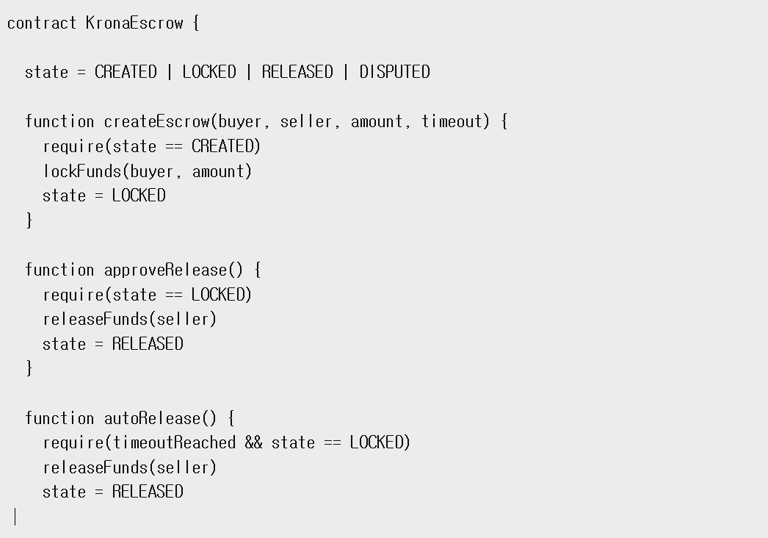
13.1 Escrow Smart Contract Logic (Conceptual)
The escrow smart contract follows a deterministic state-based logic:
Transaction creation and asset locking
Conditional execution based on predefined rules
Automated or manual release triggers
Dispute locking and arbitration resolution
Key contract properties:
Non-custodial asset locking
Immutable transaction conditions
Multi-signature or governance-controlled dispute override
13.2 Escrow State Flow Diagram (Textual)
State Flow:
Create
Buyer creates escrow transaction
Conditions and timeout parameters are set
Lock
Assets are locked within escrow
Transaction becomes immutable
Release
Buyer approval OR auto-release conditions met
Assets transferred to seller
Dispute
Either party initiates dispute
Assets remain locked
Arbitration resolves outcome → Release or Refund
14. Executive Summary
Problem
Traditional crypto transactions lack protection mechanisms, making users vulnerable to fraud, delivery failures, and counterparty risk. Existing escrow solutions are fragmented, complex, or disconnected from wallet-level user experience.
Solution
Krona Wallet integrates a native escrow system powered by Krona Token, enabling secure, automated, and dispute-managed transactions for crypto assets, goods, and services within a single wallet environment.
Krona Advantage
Escrow-native Web3 Wallet
Utility-driven token demand
Automated and scalable transaction flow
Real-world commerce integration
Staking-aligned incentives
This positions Krona as a foundational infrastructure for Web3 commerce.
15. Smart Contract Pseudocode (Audit-Ready Concept)
KRONA
Harbourfront, 2/F, 22 Tak Fung Street, Hunghom, Kowloon, Hong Kong.
Email: info@krona.cloud
© 2025 Krona. All rights reserved.
Contact Us
We are a leading global provider of cloud services, dedicated to making cryptocurrency mining accessible to everyone.