warning: There is no guarantee of future profits, platform success, or token value appreciation.
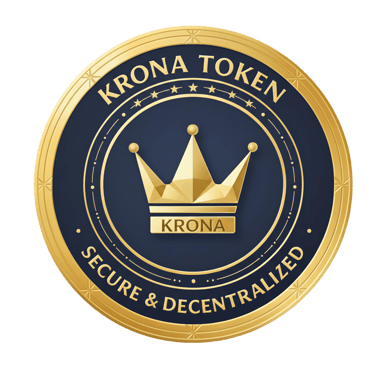
Krona Token in the Southeast Asia Crypto Market
Southeast Asia is one of the fastest-growing regions for crypto adoption worldwide, driven by a young population, mobile-first financial behavior, and strong demand for cross-border payments. Krona Token, designed as a utility-focused digital asset, is well aligned with the region’s need for practical, secure, and scalable Web3 transaction infrastructure.
1/11/20262 min read
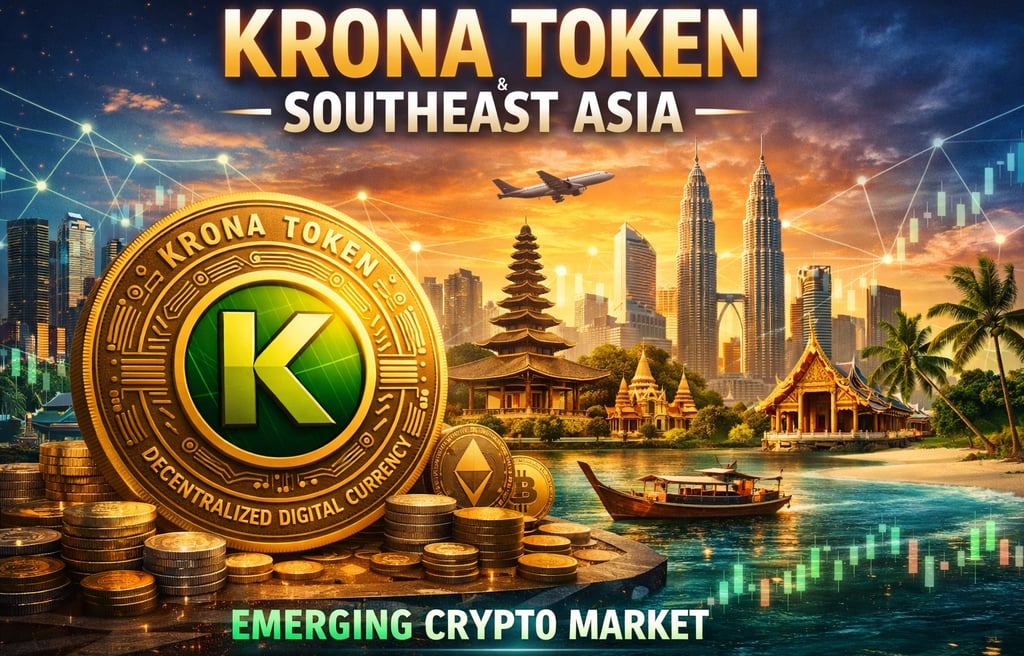
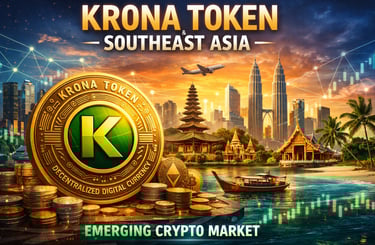
Krona Token – Southeast Asia Market Analysis
Krona Token in the Southeast Asia Crypto Market
Executive Summary
Southeast Asia is one of the fastest-growing regions for crypto adoption worldwide, driven by a young population, mobile-first financial behavior, and strong demand for cross-border payments. Krona Token, designed as a utility-focused digital asset, is well aligned with the region’s need for practical, secure, and scalable Web3 transaction infrastructure.
This report analyzes the Southeast Asia crypto market and evaluates Krona Token’s market opportunity, competitive positioning, and go-to-market strategy.
Southeast Asia Crypto Market Overview
High Adoption Rates: Indonesia, Vietnam, the Philippines, and Thailand consistently rank among the top countries in global crypto adoption indexes.
Key Use Cases: Payments, remittances, DeFi, staking, gaming, and P2P transactions.
Market Characteristics:
Large unbanked and underbanked populations
Strong reliance on mobile wallets
Rapid growth in demand for stablecoins and utility tokens
Market Opportunity for Krona Token
Alignment with Utility-Driven Demand
Users in Southeast Asia tend to prioritize practical functionality over speculative assets. Krona Token is built around real-world utility, including:
Escrow-based secure transactions
Wallet-centric payment flows
Staking and reward mechanisms
Integration with Web3 commerce infrastructure
This design strongly matches regional user behavior and adoption patterns.
Cross-Border Payments and Remittances
Southeast Asia is one of the world’s largest remittance corridors. Krona Token can function as:
A low-cost and fast settlement asset
An alternative to traditional remittance systems
A bridge token within multi-wallet and multi-chain ecosystems
Competitive Positioning
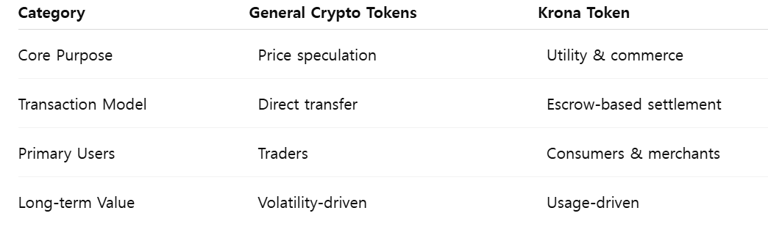
Krona Token is differentiated by its escrow-based transaction infrastructure and real-use-case orientation.
Regulatory Landscape and Strategy
Fragmented Regulations: Singapore and Thailand operate under licensing frameworks, while Indonesia and Vietnam are still evolving their regulatory structures.
Krona Strategy:
Wallet-first utility deployment
Compliance-ready architecture (KYC/AML adaptable)
Partnership-driven expansion with low exchange dependency
This approach minimizes regulatory friction while enabling scalable market entry.
Go-To-Market Strategy in Southeast Asia
Krona Wallet Adoption – Position the wallet as the primary utility gateway
Local Partnerships – Collaborate with Web3 platforms, merchants, and payment providers
Staking Incentives – Encourage long-term holding and ecosystem participation
Escrow Use Case Expansion – Focus on P2P commerce, digital goods, and cross-border trade
Growth Outlook (2026–2027)
Increasing demand for utility tokens with real use cases
Expansion of Web3 commerce and decentralized payment infrastructure
Growing preference for functional value over short-term volatility
Krona Token is positioned for sustainable growth by embedding itself into everyday digital transactions rather than relying on speculative trading cycles.
Conclusion
Southeast Asia represents a high-growth, utility-driven crypto market. With its utility-first design, escrow-based security model, and wallet-centric ecosystem, Krona Token has strong potential to become a practical and trusted digital asset across the region.
Future success will depend on strategic partnerships, regulatory-aware expansion, and the continuous development of real-world use cases.
KRONA
Email: info@krona.cloud
© 2025 Krona. All rights reserved.
Contact Us
KRONA Token functions as a utility token for payment, escrow, staking, and risk control, enabling automated settlement, economic accountability, and global scalability for real-world commerce.